



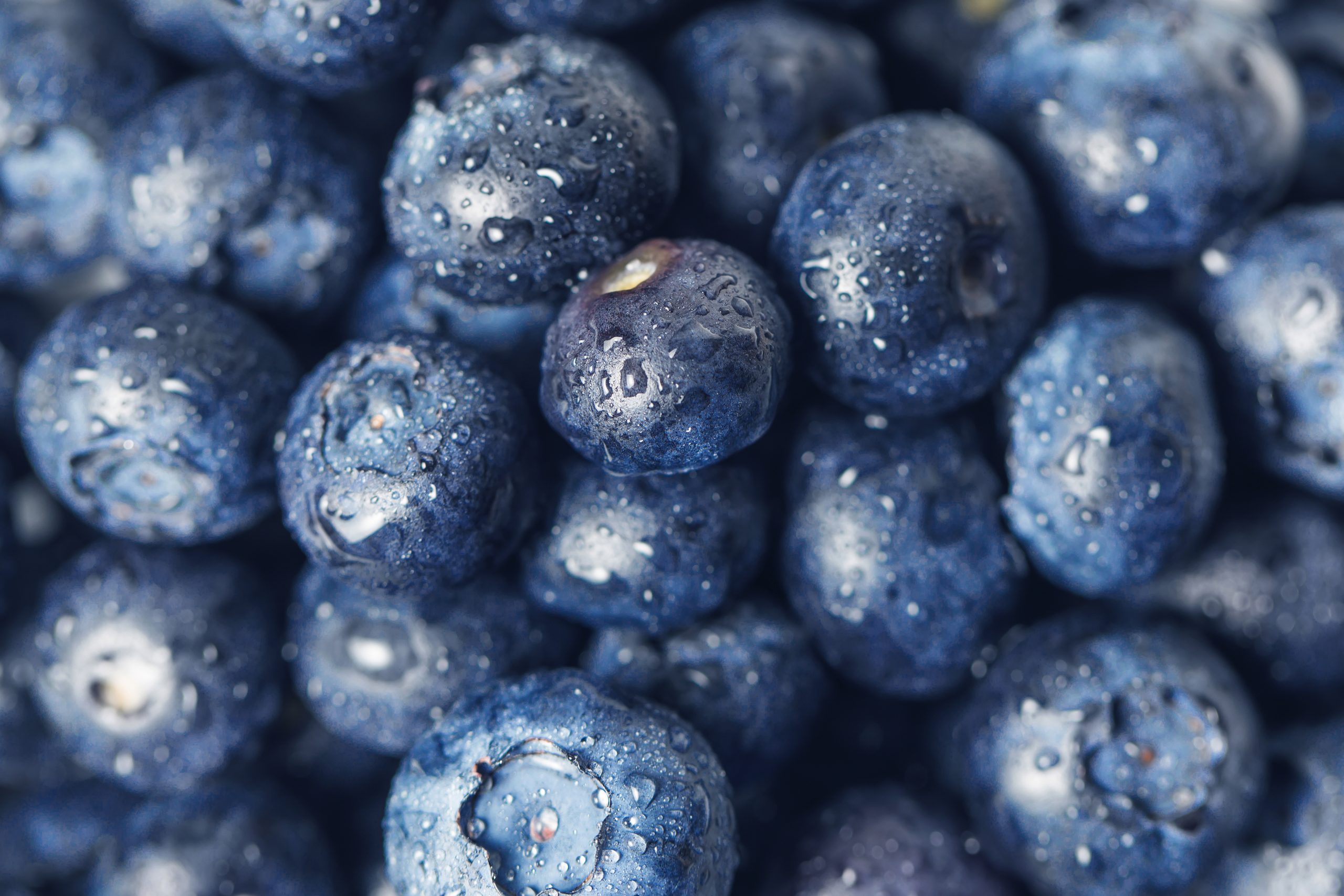
Unlike Violet Beauregarde, blueberry chewing gum will not turn you into a giant blue ball. But blueberry may well add color to your everyday life: your fingers, your recipes, and your cravings.
Small in size yet intense in profile, blueberry is gaining shelf appeal thanks to its indulgent image, deep color, and versatile pairings.
Blueberry: a fruity profile with strong potential
Indulgent, tangy, and naturally associated with its blue-purple color, blueberry stands out as a versatile note for developing distinctive sweet products and beverages.
A berry with a wellness image
Thanks to its association with antioxidants and anthocyanins, blueberry benefits from a naturally positive image.
Highly versatile applications
It works well in functional beverages, protein products, desserts, dairy products, pastries, and chocolate confectionery.
An easy-to-pair profile
Red berries, citrus, vanilla, honey, coconut, or basil can be used to create recipes that feel both familiar and creative.
The origin of blueberry
Blueberry (Vaccinium myrtillus) is a small wild berry that grows naturally in the cool, wooded regions of the Northern Hemisphere: European forests, Scandinavian moorlands, the mountains of North Asia, and temperate regions of North America.
It thrives in acidic soils and wild environments, where it forms small, discreet bushes that blend into the landscape.
A close relative cultivated on a large scale
Its American cousin, the blueberry, is larger and sweeter. It is cultivated on a large scale and now dominates the global market.
The nutritional benefits of blueberry
Blueberry is one of the fruits richest in antioxidants, particularly anthocyanins: valuable compounds that help protect the body and give the berry its beautiful blue-purple color.
Antioxidants
Anthocyanins contribute to its image as a fruit naturally associated with wellness.
Fiber
Its fiber supports healthy digestion and helps promote a longer-lasting feeling of fullness.
Vision
Its anthocyanins may help support vision and reduce eye fatigue.
Where can blueberry be found?
Its color, flavor depth, and fruity image allow blueberry to fit naturally into many sweet categories.
Protein products & functional beverages
Energy drinks, protein powders, and sports recovery bars.
Yogurts & dairy products
A natural pairing with creamy textures and smooth profiles.
Juices, beverages & kombuchas
It brings depth, color, and a recognizable fruity signature.
Bakery, pastry & chocolate
Muffins, pancakes, waffles, ganaches, inclusions, and indulgent coatings.
The best sweet pairings with blueberry
These pairings highlight blueberry’s tangy sweetness and deep flavor while adding freshness, roundness, or contrast depending on the recipe.
- Red berries: strawberry, raspberry, blackcurrant…
- Lemon and citrus, to enhance freshness.
- Vanilla, honey, or coconut, to bring roundness and indulgence.
- Basil, for a more botanical and contemporary touch.
Discover our indulgent ideas to enhance its flavor!
Blueberry and lemon muffins
A timeless classic where lemon juice and zest reveal and balance the intense flavor of blueberries. Soft at the center, this muffin is the very definition of indulgent comfort.
Blueberry and vanilla protein smoothie
A smooth and balanced beverage where blueberry brings its antioxidants and vibrant purple color, enhanced by the sweetness of vanilla.
Blueberry and basil kombucha
A surprising and elegant combination: the light acidity of kombucha meets the depth of blueberry and the herbal freshness of basil, creating a lively, original beverage full of character.
Selected product launches
Blueberry continues to inspire brands across a variety of applications, from alcoholic beverages to plant-based desserts.

Blueberry-flavored vodka alcoholic beverage

Blueberry and coconut-flavored energy drink

Organic blueberry protein dessert

Blueberry wafer cereal bars

Plant-based soy yogurt-style dessert flavored with blueberry muffin
Frequently asked questions about blueberry
What is the flavor profile of blueberry?
Blueberry offers a fruity, sweet, and slightly tangy profile, with a distinctive depth that can evoke red berries, dark berries, and more jammy notes depending on the application.
In which applications is blueberry flavor particularly relevant?
It is particularly well suited to functional beverages, protein products, yogurts, plant-based desserts, pastries, muffins, pancakes, cereal bars, and chocolate confectionery.
Which pairings work best with blueberry?
The most natural pairings are red berries, lemon and citrus, vanilla, honey, coconut, and basil. They make it possible to play with freshness, roundness, or flavor contrast.
Why is blueberry interesting for wellness-oriented products?
Its image is strongly linked to antioxidants, anthocyanins, and naturalness. It can therefore bring an indulgent, fruity, and positive perception to products with a nutritional or functional positioning.
Want to explore the blueberry profile in your applications?
Whether indulgent, tangy, fruity, or paired with more creative notes, blueberry offers many innovation opportunities for sweet products and beverages.
Contact us →